menu
close

"Eloquent, articulate, contemplatively thoughtful and iconoclastically thought-provoking...
Divinity School is a unique and unreservedly recommended pick for personal, professional, [and] community reading."
- Midwest Book Review
"There is a tremendous amount of information and experience behind this deceptively little book…
The collection moves deliberately from “God” to “Buddha,” passing through Eve, Gabriel, Joseph, Christ, St. Thomas, Judas, Mary Magdalene, Pontius Pilate and Mary, before widening into language, art, religion, dogma, truth, compassion, non-duality, and the infinite.
[Elizabeth Pyjov] is encouraging us to reconsider certain givens from a new perspective, which is an important life skill…
What I appreciate about Divinity School is that Pyjov does not simply replace one fixed interpretation with another, or insist that she has arrived at a final meaning. Instead, she allows a little poetic widening and lateral thought.
Pyjov’s poems are concise—sometimes only four lines long—but they are not quite pith poetry, nor do they give us the abrupt thump on the head of a Zen master. Their simplicity works more gently.
Rather than asking us to abandon inherited teachings, these poems prompt us to pay attention to them again, reconsider what we have taken as given, and do some of the mental hard work that genuine learning requires. If this is a divinity school, its lessons are not found in absorbing the correct answers, but in questioning, comprehending, and discovering what, if anything, we can actually do with what we think we know."
- Buddhist Door Global Magazine
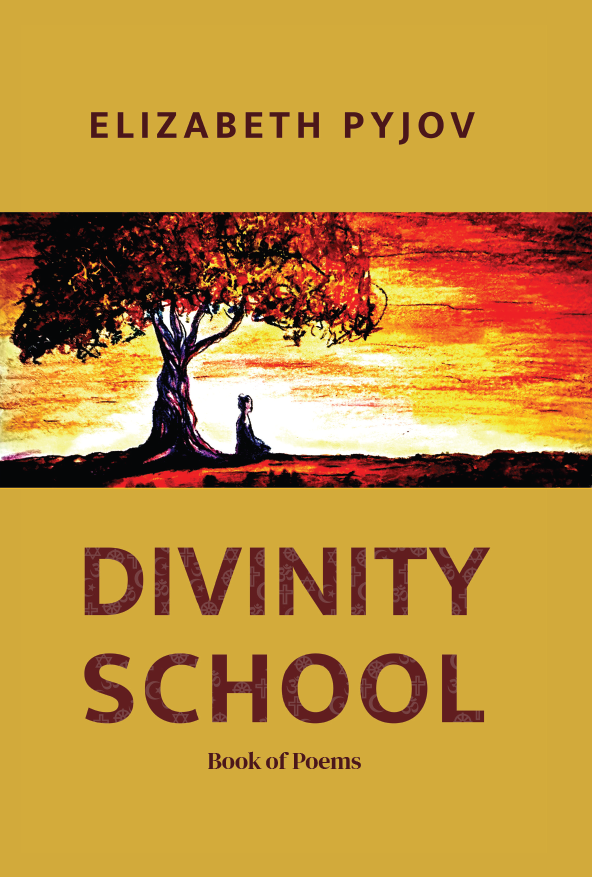
This collection of poems offers a Buddhist reinterpretation of Judeo-Christian theology, examining core religious concepts and figures through an Eastern philosophical lens.
It presents alternative perspectives on well-known biblical narratives, such as the roles of God, Eve, Christ, and the apostles, often emphasizing themes of non-duality, doubt as a twin of belief, and the limitations of language and dogma.
The text also explores broader spiritual ideas like suffering, the nature of truth, the perception of time, and the continuous flux of existence, suggesting that wisdom is found in the space of not knowing. Overall, the book of poems engages in a contemplative and critical dismantling of traditional religious certainties to advocate for a more nuanced and experience-based spirituality.
In the Foreword to this poetry collection, Harvard Professor Michael Puett writes:
"Elizabeth explores theology and cosmology across several traditions through an unconventional lens....Compassion and a humanistic worldview run through the poems. Along the way, she captures in brief poems the heart of Buddhist thought-not as a religion, but a way of looking at the world-without compromising the complexity of Buddhist cosmology....Elizabeth opens the door to our heightened awareness as well. We can joyfully accept the invitation."
As a professor, theologian, and meditation teacher, Elizabeth Pyjov strives to make the world more compassionate. The intention of this collection is to create some distance between us and our harsh judgments so that we can be present with reality in a loving way.
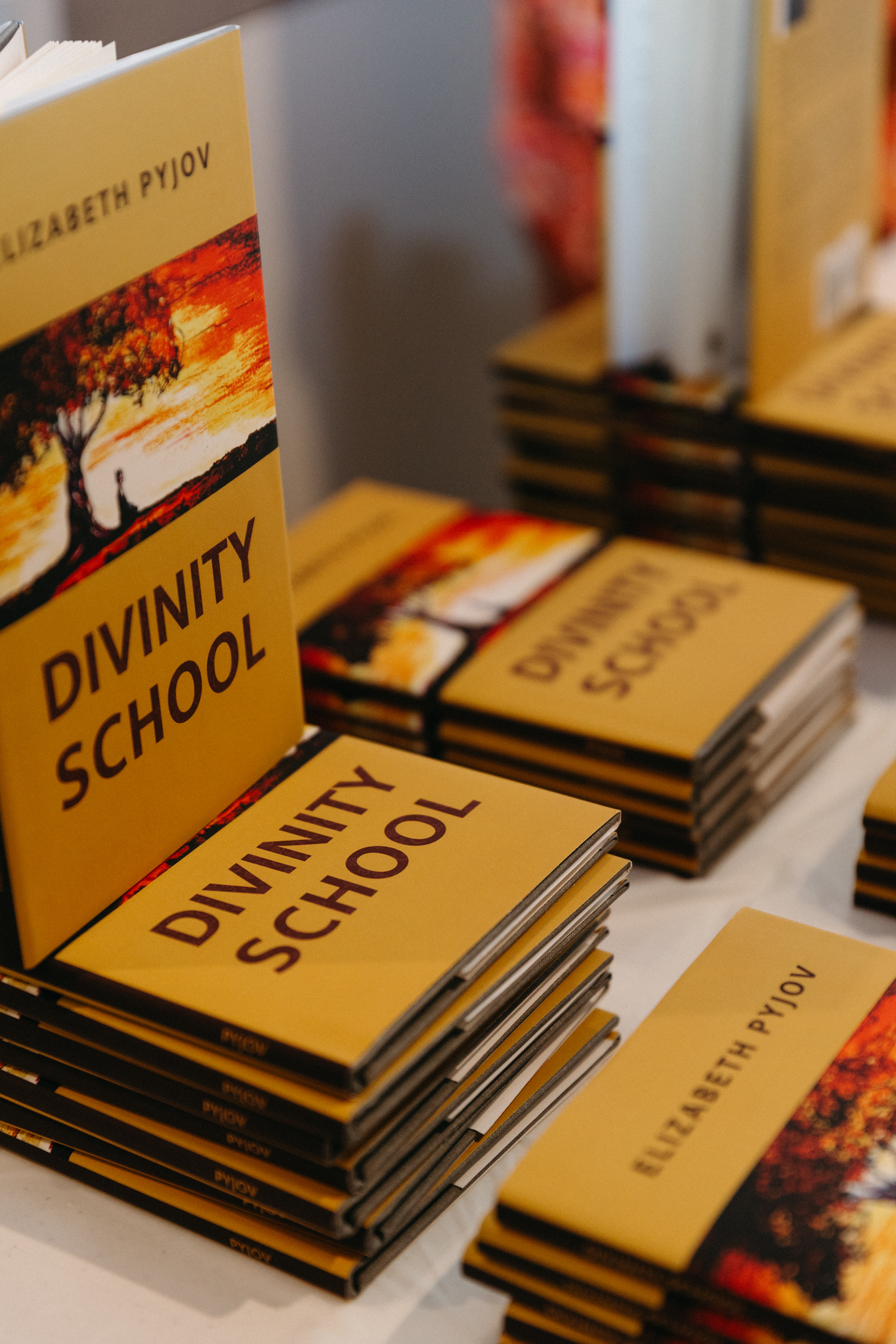
Divinity School is her first volume of poetry.
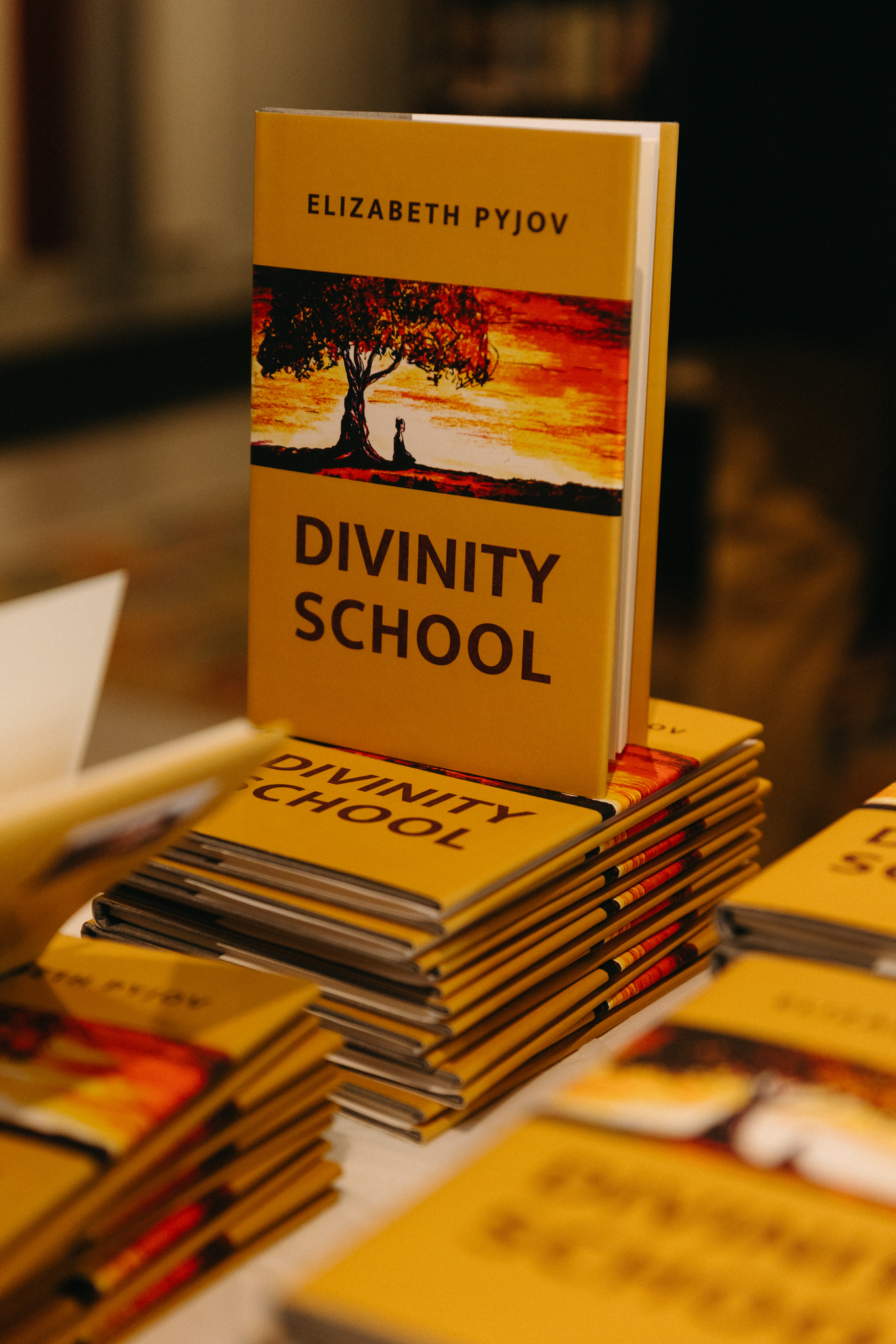
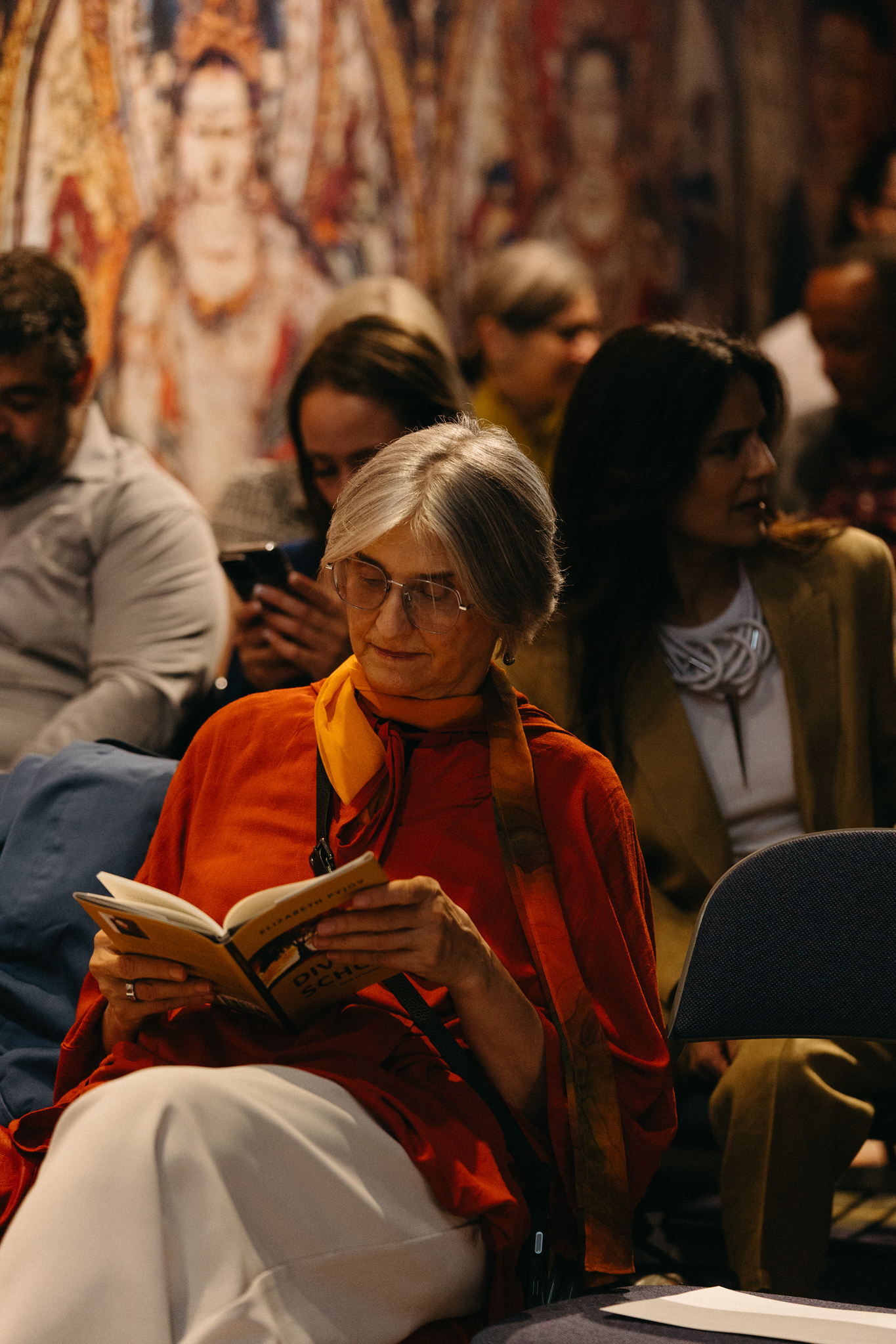
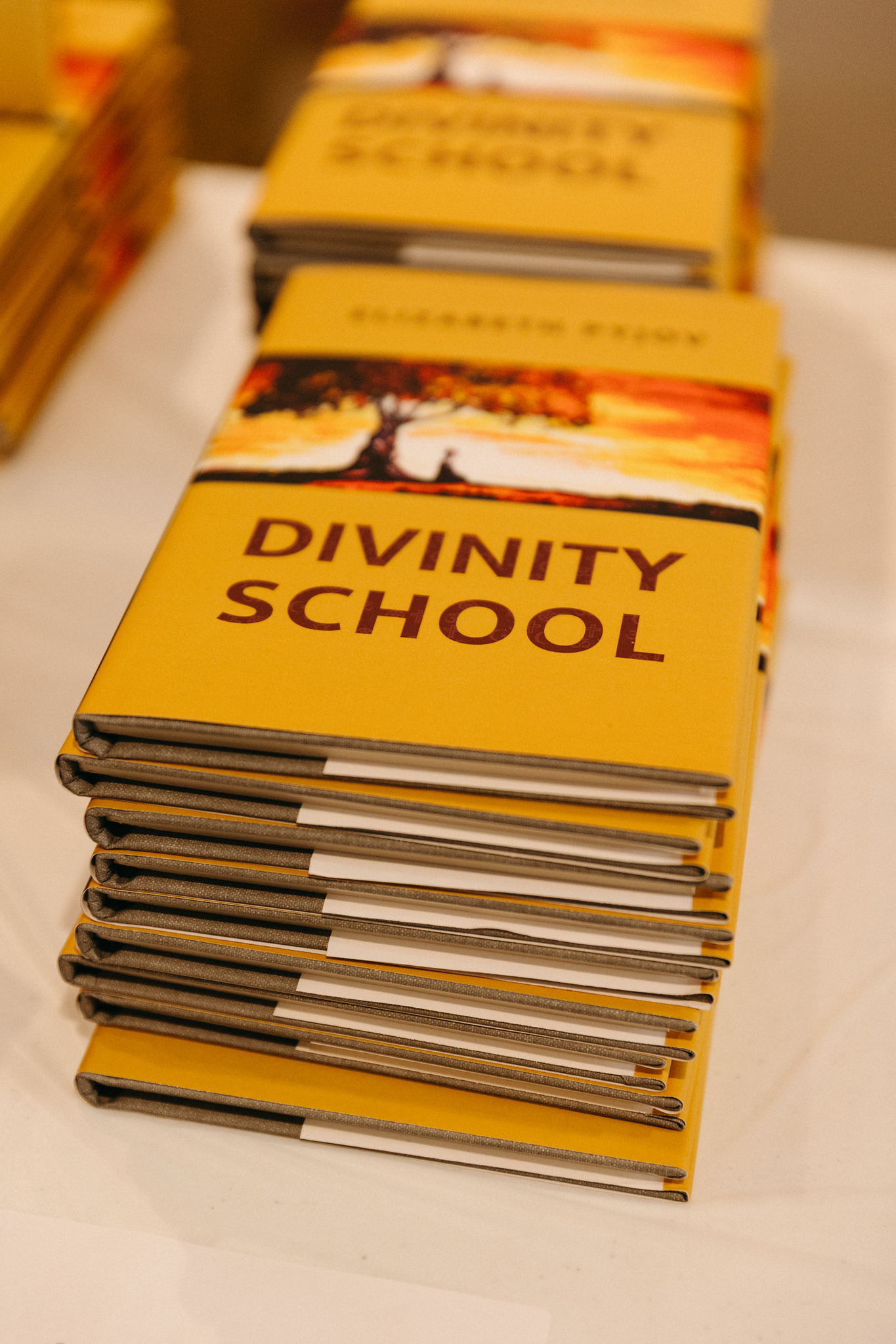
Sign up for updates and event announcements from Elizabeth to get Happiness Sangha in your inbox!
.svg)
We care about your data, and we'd use cookies only to improve your experience. By using this website, you accept our cookie policy. Learn More
By using this website, you accept our cookie policy. Learn More